

 Current position > Product detail
『Open channel electromagnetic flowmeter』Related information(v cone flow meter|rotary gas meter|gallon meter|gear meter|metal tube rotameter|glass tube rotameter|nutating disk meter|transit time ultrasonic flow meter|wedge flow meter|pd meters|hydraulic flow meter|ultrasonic water flow meter|water flow meter|air flow meter|magnetic water flow meter|oxygen flow meter|gas flow meter|argon flow meter|air velocity meter|gasoline flow meter|fuel flow meter|ultrasonic water meter|digital water meter|nitrogen flow meter|solid flow meter|Oxygen tank flow meter|digital water flow meter|diesel fuel flow meter|steam flow meter|02 flow meter|compressed air flow meter|oil flow meter|liquid flow meter)
1. What flow meter can measure the flow rate of incomplete pipes?
Electromagnetic flowmeter, ultrasonic flowmeter, and open channel flowmeter are common choices in the scenario of measuring the flow rate of the pipeline.
. 1. The electromagnetic flowmeter is designed based on the principle of electromagnetic induction, and calculates the flow rate by measuring the induced electromotive force generated by a conductive liquid in a magnetic field. Advantages: Strong adaptability to conductive liquids, unaffected by factors such as fluid density and temperature, and high measurement accuracy. Applicable scenarios: Non full tube measurement of conductive liquids such as sewage treatment, chemical acid and alkali media, etc.2. Ultrasonic flowmeter adopts the principle of time difference of ultrasonic co current/counter current propagation, and non-contact measurement of flow velocity. Advantages: Flexible installation, minimal pressure loss, suitable for irregular pipeline laying environments. Applicable scenarios: Large diameter water supply pipelines, circulating water systems, and other situations where fluid does not need to be cut off. 3. Open channel flow meters measure flow by linking liquid level height with channel geometric parameters and require a matching weir structure. Advantages: Suitable for rectangular/trapezoidal/circular open channels, with low maintenance costs. Applicable scenarios: open channel flow monitoring for agricultural irrigation, municipal drainage, etc.
2. Six commonly used classification methods for electromagnetic flow meters
The six commonly used classification methods for electromagnetic flow meters are as follows:
1. Classification by output s
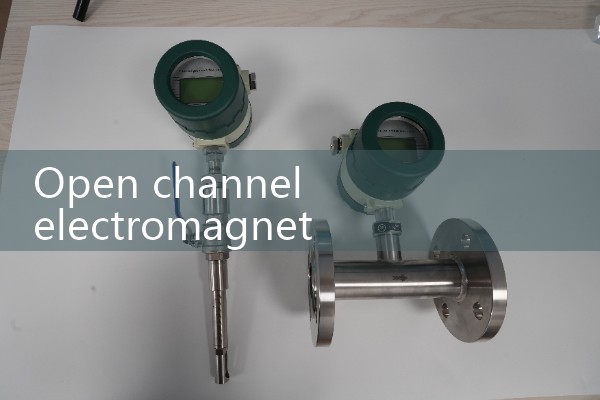
2. Classified Electromagnetic Flowmeters by Sensor and Converter Assembly Method: The sensor is connected to the pipeline, and the converter is installed in the instrument room or nearby, with a distance of tens to hundreds of meters.
. The signal cable adopts double-layer shielding. When measuring low conductivity liquids and the distance exceeds 30 meters, the drive needs to be shielded. Separable converters can be kept away from harsh environments and are easy to maintain, but the installation cost is relatively high. Integrated electromagnetic flowmeter: The sensor and converter are assembled as one, directly outputting standard signals, shortening the length of signal line connections, reducing signal attenuation and noise intrusion. Suitable for small diameter instruments, the price and installation cost are relatively low, but maintenance is inconvenient and limited by fluid tem