

 Current position > Product detail
『Flow Meter Accuracy Grade 0.15 Error Calculation: Metrology Sizing Formulas』Related information(v cone flow meter|rotary gas meter|gallon meter|gear meter|metal tube rotameter|glass tube rotameter|nutating disk meter|transit time ultrasonic flow meter|wedge flow meter|pd meters|hydraulic flow meter|ultrasonic water flow meter|water flow meter|air flow meter|magnetic water flow meter|oxygen flow meter|gas flow meter|argon flow meter|air velocity meter|gasoline flow meter|fuel flow meter|ultrasonic water meter|digital water meter|nitrogen flow meter|solid flow meter|Oxygen tank flow meter|digital water flow meter|diesel fuel flow meter|steam flow meter|02 flow meter|compressed air flow meter|oil flow meter|liquid flow meter)
Flow Meter Accuracy Grade 0.15 Error Calculation: Metrology Sizing Formulas
Quick Answer: A flow meter with accuracy grade 0.15 delivers a measurement error of ±0.15 % of the actual reading under reference conditions. For a Coriolis meter reading 4,500 kg/h, the expected error band is ±6.75 kg/h. Sizing a meter purely on line size often kills accuracy. You must calculate the minimum and normal flow velocity, check the Reynolds number, and confirm the meter turndown ratio against your real process window.
Understanding Accuracy Grade 0.15 in Industrial Flow Meters
Grade 0.15 is not a full scale statement. It ties error to the measured value. A lot of engineers mix this up. If a flow meter spec says 0.15 % of rate, it does not mean ±0.15 % of a 20 mA span. At 10 % flow, the absolute error shrinks. At 100 % flow, it is larger but the percentage stays tight. Silver Automation Instruments supplies Coriolis mass flow meters where the base accuracy sits at 0.15 % for liquids across a wide turndown band. For gas applications, the number shifts to 0.5 % of rate, and we state that clearly on every SIL-COM data sheet.
Here is the thing. A 0.15-grade meter does a different job than a 0.5-grade electromagnetic meter. You pay for the repeatability and the straight certification. Most engineers skip the metrology sizing part and then blame the instrument. In practice, we see this on customer sites in Southeast Asia and the Middle East every month. A chemical blender in Indonesia ran a DN15 Coriolis meter at 3 % of its max flow on a Sunday shift. The zero stability error ate the batch tolerance. The meter was fine. The sizing was wrong.
Error Calculation Formula for a 0.15 Grade Coriolis Meter
Write this down. The total error for a Coriolis meter combines the reading error and the zero stability drift.
Total Error = ± (0.15 % × Reading + Zero Stability)
Zero stability is an absolute number in kg/h or lb/min. For a Silver Instruments SIL-COM DN25 sensor, the zero stability is 0.2 kg/h for water-like liquids. Assume the plant runs a batch at 2,000 kg/h. The rate-based part gives ±3 kg/h. Add the zero offset. Your real accuracy at that moment is ±3.2 kg/h, which is 0.16 % of reading. Still inside the class. But drop the flow to 200 kg/h. The reading part becomes ±0.3 kg/h. The zero stability stays fixed. Now total error is ±0.5 kg/h, which is 0.25 % of the reading. The meter is no longer a 0.15 instrument at that point. This is why turndown ratio matters.
Temperature and pressure affect the calculation too. A 50 °C shift changes the sensor tube stiffness. Our meters compensate that with a built-in PT100 and a live density signal. The 4-20 mA HART output carries mass flow, density, and temperature. If you feed that into a flow computer, the error propagation stays controlled.
Metrology Sizing Formulas You Can Use Right Now
Do not pick a flow meter size just to match a DN50 pipe flange. That path creates a meter that runs at 0.3 m/s velocity and never leaves the noise floor. The reference velocity for liquids should sit between 1 and 5 m/s in the sensor. Use this basic formula.
v = (4 × Q) / (π × d² × ρ × 3600)
Where v is velocity in m/s, Q is mass flow in kg/h, d is internal pipe diameter in meters, and ρ is density in kg/m³. For a volumetric flow meter, drop the density term.
Now check the Reynolds number. A Coriolis meter does not need a turbulent profile, but the flow split inside the tubes demands a minimum Re number above 10,000 to suppress secondary phase effects. When a biodiesel plant in Vietnam sized a DN15 meter for a 15 cP oil, the Re number was 1,200 at nominal flow. The accuracy drifted to 0.4 %. We moved them to a DN10 sensor with the same process connection. Velocity jumped. Re number crossed 9,500. The meter went right back to 0.15.
Pressure loss is the next gate. For a viscous fluid, use the Darcy-Weisbach equation with a laminar flow friction factor. SIL-COM meters have a maximum pressure drop of 0.3 to 0.8 bar at nominal flow for water. If your pump only gives 2 bar head and the meter eats 0.9 bar, you have a problem. Give us your pressure (bar), temperature (°C), pipe size (DN), and flow range. We size the meter so you do not build a system bottleneck.
Where Grade 0.15 Meters Win in Real Plants
A paint manufacturer in Thailand used
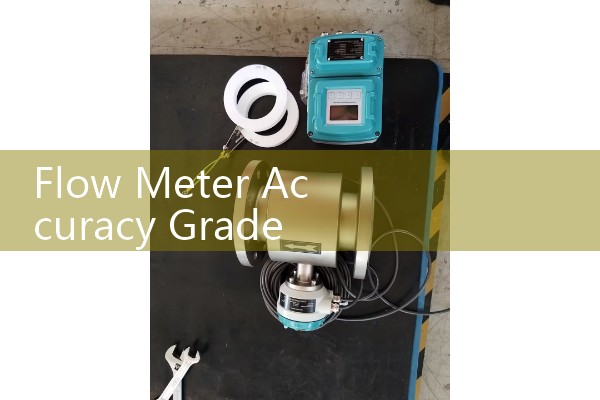
In desalination plants, a 0.15 electromagnetic flow meter version from Silver Instruments handles brine at 75 µS/cm. The standard mag meter gives 0.3 % accuracy. Our 0.15 grade mag meter uses a pulsed AC field and a PTFE liner with Hastelloy electrodes. The error calculation on a 12,000 m³/h seawater intake line shows a measurement uncertainty of ±18 m³/h. That is tight enough for custody transfer between the intake pump station and the RO building.
For custody transfer in the Middle East oil terminals, a 0.15 Coriolis meter with a MID or OIML R117 certificate becomes the legal meter. The error formula now includes a meter factor derived from a water or oil prover. The meter factor is a straight multiplier applied inside the SIL-COM transmitter electronics. You enter it over Modbus RTU or the local display. The meter then outputs the corrected mass. This makes audit trails clean.
Common Mistakes with 0.15 Grade Meter Installation
We see partial pipe runs that leave the sensor half empty. A Coriolis meter detects two-phase flow but the accuracy collapses to 2 % or worse. Install the meter in a vertical pipe with upward flow if gas breakout is possible. That forces the liquid to stay in contact with the tubes. Another mistake. Placing a pressure reducing valve 50 mm before the sensor inlet. The flashing liquid creates cavitation bubbles that damp the tube vibration. Put the valve downstream or move the meter far enough away for the bubbles to collapse.
Vibration from a nearby piston pump kills the zero. A customer in Lagos bolted a DN50 Coriolis meter directly to a triplex pump skid. The zero drifted by 0.8 kg/h every hour. We sent a flexible hose set and vibration isolation clamps. The problem vanished. The 0.15 grade came right back.
FAQ
Q1: What does accuracy grade 0.15 mean on a flow meter data sheet?
It means the maximum permissible error is ±0.15 % of the measured flow rate under reference conditions. It is a rate-based spec, not a full-scale spec. A 0.15 grade Coriolis meter from Silver Instruments holds this from 20 % to 100 % of the flow range for liquids.
Q2: How do I calculate the error at low flow for a 0.15 grade meter?
Add the zero stability value to the 0.15 % of reading component. Zero stability is a fixed kg/h number. At very low flows, zero stability dominates the total error. For a DN15 meter with 0.1 kg/h zero stability, a 10 kg/h flow gives a total error of 0.115 kg/h, which is 1.15 % of the reading.
Q3: Can an electromagnetic flow meter reach 0.15 accuracy for water?
Yes, in specific sizes. A Silver Instruments 0.15 grade mag meter works in DN25 to DN300 with a minimum conductivity of 5 µS/cm. It needs a straight run of 5D upstream and 2D downstream. The coil excitation is a low-frequency square wave to eliminate zero drift.
Q4: What sizing formula do I use to choose the right DN for a Coriolis meter?
Use the velocity equation v = (4 × Q) / (π × d² × ρ × 3600) and target v between 1 and 5 m/s. Then check the pressure drop. Send us your flow range, product viscosity, pressure, and temperature. We run the sizing in our SIL-Size tool and give you the DN back the same day.
Q5: Why is my 0.15 grade meter showing errors larger than 0.5 % in a batching application?
Likely air entrainment, a low Reynolds number, or an undersized meter running below 10 % of the flow span. Check the density live reading. If density fluctuates more than 2 kg/m³ during the batch, you have gas pockets. Purge the line and raise back pressure.
For a direct quote on a 0.15 grade Coriolis, electromagnetic, or ultrasonic flow meter, send your process data to Silver Automation Instruments. Include your flow rate (kg/h or m³/h), product viscosity (cP), pressure (bar), pipe size (DN), and process temperature (°C).
Tel: +86-25-68650347
Whatsapp: +86-25-52155837
WeChat: +86 15365082610
We size the meter and return the error calculation sheet inside one working day.