

『How Does an Annubar Flow Meter Work: Uses an averaging pitot tube probe to sample structural upstream and downstream differential system pressures.』Related information(v cone flow meter|rotary gas meter|gallon meter|gear meter|metal tube rotameter|glass tube rotameter|nutating disk meter|transit time ultrasonic flow meter|wedge flow meter|pd meters|hydraulic flow meter|ultrasonic water flow meter|water flow meter|air flow meter|magnetic water flow meter|oxygen flow meter|gas flow meter|argon flow meter|air velocity meter|gasoline flow meter|fuel flow meter|ultrasonic water meter|digital water meter|nitrogen flow meter|solid flow meter|Oxygen tank flow meter|digital water flow meter|diesel fuel flow meter|steam flow meter|02 flow meter|compressed air flow meter|oil flow meter|liquid flow meter)
How Does an Annubar Flow Meter Work?
Quick Answer: An Annubar flow meter uses an averaging pitot tube probe to sample structural upstream and downstream differential system pressures. The probe spans the pipe diameter and averages the pressure profile. A differential pressure transmitter converts the signal to 4-20 mA HART and a flow computer calculates flow rate.
What Is an Annubar Flow Meter?
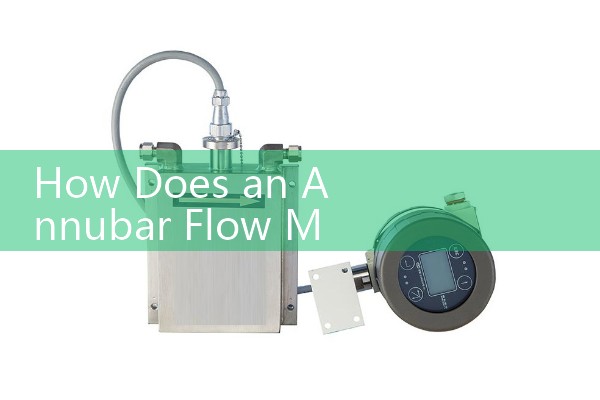
An Annubar flow meter is a differential pressure flow meter with an averaging pitot tube primary element. It suits large pipes where inline meters cost too much. Silver Automation Instruments supplies the DP transmitter, PT100 RTD, and paperless recorder that complete the loop.
Working Principle
An Annubar flow meter works on the Bernoulli principle. Upstream holes face the flow and measure total pressure. Downstream holes face away and measure static pressure. The difference between these two values is the dynamic pressure. Flow rate is proportional to the square root of this differential pressure.
Single point pitot tubes sample one location. An Annubar probe has multiple holes across the pipe. This averaging reduces error caused by irregular velocity profiles after elbows or valves. A DN200 probe may have 4 to 6 upstream sensing holes.
Signal Conversion
The probe produces a differential pressure. A DP transmitter converts that reading to an electronic signal. Typical ranges are 0-10 kPa, 0-25 kPa, or 0-100 kPa. The output is normally 4-20 mA HART. The flow computer takes the square root of the differential pressure. It adds temperature and pressure compensation for gas and steam.
Silver Instruments recommends a DP transmitter with 0.075 percent accuracy and a PT100 RTD for steam lines. For natural gas, add a pressure transmitter with 0.5 percent accuracy. This gives mass flow in kg/h or standard cubic meters per hour.
Installation and Straight Pipe Run
Installation is simpler than an orifice plate on large lines. The probe enters through a weld-on fitting or a flange connection. Common pipe sizes are DN50 to DN3000. A 2 inch or 3 inch process connection is typical for hot tap installation. Hot tapping allows the probe to be installed without shutting down the line.
Straight pipe run matters. Keep 10 pipe diameters upstream and 5 downstream. For a DN300 line, the probe needs about 3 meters of straight pipe before the insertion point. In practice, many plants have short pipe runs. Most engineers skip this check until the reading drifts. A paint manufacturer in Southeast Asia installed a DN150 Annubar after a 90 degree elbow. The initial error was 4 percent until the probe was relocated.
Accuracy and Pressure Loss
A properly installed Annubar flow meter has an accuracy of 0.5 percent to 1.5 percent of reading. Repeatability is around 0.1 percent. Turndown ratio is often 10 to 1. Permanent pressure loss is lower than an orifice plate. A DN200 orifice plate can lose 10 kPa permanently. An Annubar probe may lose 1 kPa or less at the same flow. Lower pressure loss reduces pumping cost over years.
Dirty fluids cause most field failures. Sensing holes can plug in wastewa
Typical Applications
Annubar flow meters work well in large pipes and ducts. Common examples include steam headers in food and beverage plants, compressed air in textile factories, and cooling water in HVAC systems. They also handle natural gas lines in boiler houses and seawater feed lines in desalination plants. For pipe sizes above DN150, an inline magnetic flow meter costs much more. A seawater flow meter for desalination plant feed lines can be an Annubar probe on a DN900 line instead of a full bore magnetic meter. Cooling water with conductivity up to 1500 µS/cm is another common fit.
For pipe sizes from DN15 to DN50, choose a smaller inline meter. An oval gear flow meter handles viscous liquids below 50 cP. An electromagnetic flow meter is better for small conductive water lines.
Annubar vs Orifice Plate and Vortex
An orifice plate costs less for small line sizes. An Annubar is cheaper for large pipe because it does not require cutting the pipe and welding a plate carrier. A vortex flow meter works well for steam and gives a direct frequency output. But a vortex meter has a minimum flow velocity. An Annubar can operate at lower velocities because you can adjust the DP transmitter range. In hazardous areas, use a DP transmitter rated for ATEX Zone 1.
Recommended Signal Loop
For a steam line, use an Annubar probe with a DP transmitter 0-25 kPa. Add a PT100 RTD and a pressure transmitter. The flow computer calculates mass flow in kg/h. Silver Automation Instruments supplies 4-20 mA HART transmitters, local indicators, and paperless recorders with totalizer functions. The recorders log flow, pressure, and temperature on one screen.
Send us your pipe size, fluid, pressure in bar, temperature in °C, and flow range. We will recommend the DP range and the signal wiring. Tel: +86-25-68650347. WhatsApp: +86-25-52155837. WeChat: +86 15365082610.
FAQ
What does an Annubar flow meter measure?
It measures the differential pressure between upstream and downstream sensing holes. The flow computer converts this differential pressure into flow rate.
Can an Annubar flow meter work for steam?
Yes. Steam measurement needs temperature and pressure compensation. Use a PT100 RTD and a pressure transmitter with the DP transmitter.
What pipe sizes suit an Annubar flow meter?
Most probes cover DN50 to DN3000. For lines above DN3000, manufacturers may offer custom lengths.
How often do you need to clean an Annubar probe?
In clean gas or liquid, once per year is enough. In dirty biogas or wastewater, clean every 3 to 6 months. Plugged holes are the main cause of drift.
Does Silver Instruments sell Annubar flow meters?
We supply the complete secondary loop including DP transmitters, RTD sensors, pressure transmitters, and paperless recorders. Send your process data and we will quote the full package.
 Hot Blog
 Related AD