

『How to Improve Peak Flow Meter Results: Coordinate with a healthcare professional to optimize your management plan and ensure you are using the correct exhalation technique.』Related information(v cone flow meter|rotary gas meter|gallon meter|gear meter|metal tube rotameter|glass tube rotameter|nutating disk meter|transit time ultrasonic flow meter|wedge flow meter|pd meters|hydraulic flow meter|ultrasonic water flow meter|water flow meter|air flow meter|magnetic water flow meter|oxygen flow meter|gas flow meter|argon flow meter|air velocity meter|gasoline flow meter|fuel flow meter|ultrasonic water meter|digital water meter|nitrogen flow meter|solid flow meter|Oxygen tank flow meter|digital water flow meter|diesel fuel flow meter|steam flow meter|02 flow meter|compressed air flow meter|oil flow meter|liquid flow meter)
How to Improve Peak Flow Meter Results in Industrial Processes
Quick Answer: Most peak flow measurement errors come from poor meter selection, short straight pipe runs, or missing temperature and pressure compensation. You can fix this by sharing real process data with an engineer before purchase. Correct installation and a 12 month calibration check also keep results stable.
Why Peak Flow Data Goes Wrong on Real Plants
We have seen this on customer sites many times. A plant in Vietnam installed a turbine meter on a 100 mm steam line. The meter read 12 percent low during morning startup. The reason was wet steam and a short upstream straight run of only 4D. The operator blamed the meter. The real issue was installation and fluid condition.
Peak flow is not average flow. It changes fast. Steam hammer, pump starts, valve opening, and slug flow all create spikes. A meter with a slow response will miss the peak. A meter with the wrong wetted material will drift or corrode. These failures are easy to prevent when you share the full picture with a process engineer.
Coordinate with a Process Engineer Before You Order
Most engineers skip this part. They send a basic RFQ with only pipe size and fluid name. That is not enough for a peak flow application. You need to list the minimum and maximum flow rate, the normal operating pressure in bar, the fluid temperature in Celsius, and the viscosity or density when relevant.
Here is a real example. A chemical plant in Saudi Arabia needed a meter for a thermal oil line at 280 degree Celsius and 16 bar. The peak flow was 45 cubic meters per hour. The normal flow was 18 cubic meters per hour. We recommended a vortex flow meter with an integrated temperature sensor. This meter handled the high temperature and compensated for density changes. The result was a stable peak flow reading.
Silver Instruments has engineers who review these details before quote. Send us your pressure, temperature, pipe size, and flow range. We reply with a meter model and an installation sketch within one working day.
Match the Meter Type to Your Peak Flow Profile
Different fluids need different meter physics. For clean conductive liquids, an electromagnetic flow meter works well. It has no moving parts and handles corrosive fluids with a PTFE liner. For steam and compressed air, a vortex flow meter is often better. It measures volumetric flow and can include a temperature sensor for mass flow calculation. For large water lines in desalination plants, an ultrasonic flow meter reduces pressure loss and works with clamp on sensors.
For high accuracy batching or custody transfer, a Coriolis mass flow meter is the right choice. It measures mass directly in kg per hour. It also reads density and temperature. A food grade oil blender in Malaysia uses a Silver Instruments Coriolis meter to hit batch accuracy within 0.2 percent. The peak flow during fast filling did not affect the mass total.
Do not force one meter type across all lines. A magnetic flow meter will not measure deionized water. A vortex meter will not work well on a viscous polymer with a Reynolds number below 10,000. Share the fluid properties and we will match the right model.
Installation Technique That Lowers Peak Flow Error
The straight pipe run is the first thing a site engineer should check. A vortex meter needs about 15D upstream and 5D downstream. An electromagnetic meter needs about 5D upstream and 2D downstream. An ultrasonic meter may need 10D upstream if there are elbows or pumps nearby. These are not suggestions. They are physical requirements for a stable flow profile.
Pipe vibration also hurts peak flow data. In a Nigerian cement plant, a vortex meter on a blower discharge g
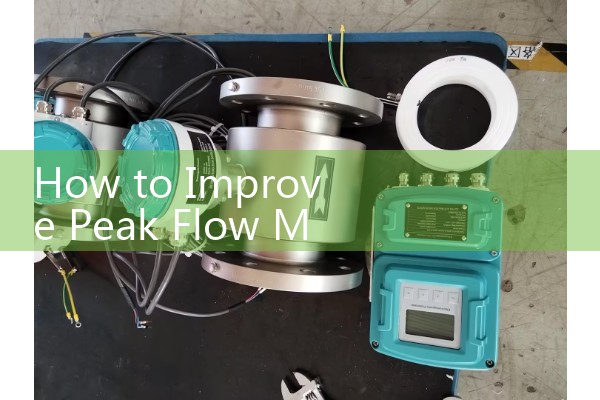
Grounding matters for electromagnetic flow meters. Use the ground rings and follow the wiring diagram. Air bubbles and cavitation create false peaks. Keep the meter full. Install a back pressure valve downstream when the line can drain by gravity.
Calibration and Verification Schedule for Peak Flow Meters
A peak flow meter drifts because liners wear, electrodes coat, or sensors age. We recommend a calibration check every 12 months for critical loops. For less critical water lines, a portable ultrasonic flow meter comparison every 24 months is enough.
Zero verification is easy for electromagnetic and Coriolis meters. Fill the pipe with fluid and bring the flow to zero. Read the digital output. If the zero offset is more than 0.5 percent of span, adjust it. If the offset returns after a few days, check for coating or grounding faults.
A palm oil refinery in Indonesia found a 3 percent offset on a DN80 electromagnetic meter. The cause was a thin oil film on the electrodes. A chemical cleaning pad fixed it. They did not need a new meter. This is the kind of detail a local instrument tech can handle.
Use HART Diagnostics and Digital Outputs
Most new Silver Instruments flow meters include 4-20 mA HART output. HART gives you more than flow rate. It reports empty pipe detection, electrode resistance, electronics temperature, and totalizer value. A plant in the Philippines used HART to find an intermittent empty pipe condition on a beer transfer line. The flow meter would read zero for three seconds during a pump switchover. The HART diagnostic flag caught it. The line was not full during that period.
Do not ignore these flags. They can explain a peak flow reading that looks wrong. A high electrode resistance means coating. A high electronics temperature means the meter is too close to a hot pipe. The diagnostics turn a mystery into a simple maintenance task.
FAQ for Improving Peak Flow Meter Performance
Question 1: Why does my peak flow reading drop when the pump starts?
This is usually a short straight run or a partially filled pipe. The flow profile is not stable during a pump start. Check the upstream piping and add a straightener if needed.
Question 2: What is the best flow meter for peak steam flow?
A vortex flow meter works well for saturated and superheated steam. Make sure the meter includes temperature or pressure compensation. Wet steam needs a steam quality correction or a different approach.
Question 3: Can a magnetic flow meter measure peak flow of wastewater with solids?
Yes. An electromagnetic flow meter with a ceramic or rubber liner handles solids and sludge. If the solids are magnetic, check with the manufacturer first.
Question 4: How often should I verify a peak flow meter on a custody transfer line?
For custody transfer, a calibration check every 6 to 12 months is common. The local weights and measures rules may set the interval. A Coriolis meter often keeps its calibration longer.
Question 5: What information do you need for a fast quote?
We need the fluid, minimum and peak flow rate, pressure in bar, temperature in Celsius, pipe size in DN, and output signal preference. Send these to Tel or Whatsapp below.
Contact Silver Instruments for a technical review of your peak flow meter application. Tel: +86-25-68650347. Whatsapp: +86-25-52155837. WeChat: +86 15365082610. Send us your pressure, temperature, pipe size, and flow range. We will reply with a recommended meter model and a simple installation sketch.
 Hot News
 Related AD